

Kiln Dried vs Air Dried Wood: Which Is Best?
Kiln dried vs Air dried wood. So, you’ve got a fantastic woodworking project brewing – maybe a stunning live edge dining table, custom cabinetry, or beautiful flooring. But before you even think about cutting, there’s a crucial decision to make: kiln-dried or air-dried wood? The drying method profoundly impacts your wood’s stability, workability, and the longevity of your finished piece.
Let’s dive into the pros and cons of each, helping you choose the perfect material for your next masterpiece.
Air Drying: The Traditional, Patient Path
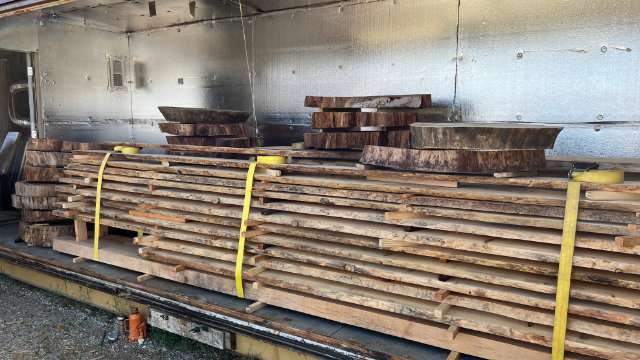
Air drying is exactly what it sounds like: wood is stacked with spacers (stickers) to allow air to circulate naturally, slowly reducing its moisture content (MC). This age-old method is still widely used, especially by smaller mills and hobbyists.
The Pros of Air Drying:
- Cost-Effective: Generally, air-dried lumber is less expensive as it doesn’t require specialized equipment or significant energy consumption.
- Environmentally Friendly: It uses natural processes, resulting in a lower carbon footprint.
- Potentially Better Color: For some wood species, air drying is believed to preserve natural color tones more effectively, resulting in richer hues.
- Less Stress on Wood: The slow, gradual drying process can be gentler on the wood, potentially leading to less internal stress.
The Cons of Air Drying:
- Time-Consuming: This is the big one. Air drying can take months, or even years, to reach equilibrium moisture content (EMC), typically around 12-20% depending on climate.
- Inconsistent Moisture Content: Achieving a perfectly even MC throughout a large batch can be challenging due to environmental variations.
- Risk of Defects: Without careful management, air-dried wood is more susceptible to warping, checking (cracks), staining, and fungal growth.
- Pest Infestation: Insects can bore into air-dried wood, potentially compromising its integrity.
Best For: Rustic projects, outdoor furniture, less critical structural elements, and those with ample time and storage space who appreciate the natural process.
Kiln Drying: The Modern, Controlled Approach
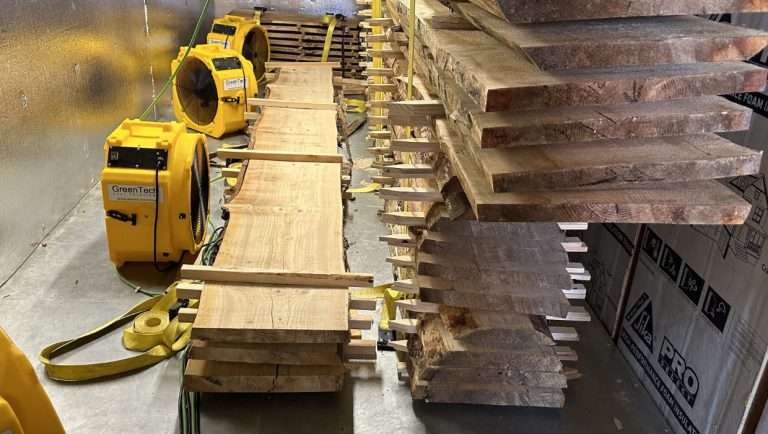
Kiln drying involves placing wood in a controlled chamber (a kiln) where temperature, humidity, and airflow are precisely managed. This accelerates the drying process and allows for greater control over the final moisture content.
The Pros of Kiln Drying:
- Speed & Efficiency: Kilns can dry wood in weeks or months, significantly faster than air drying.
- Precise Moisture Content: Kilns can achieve a very low and uniform MC (typically 6-8% for interior furniture, which is ideal for heated indoor environments). This is crucial for stability.
- Pest & Fungi Eradication: The high temperatures in a kiln kill off insects, larvae, and fungal spores, preventing future infestations and decay.
- Enhanced Stability: Uniformly dried wood is far more stable, less prone to warping, twisting, or shrinking after installation, making it ideal for fine woodworking.
- Consistent Quality: Kiln drying provides predictable and consistent results, essential for larger projects or production.
The Cons of Kiln Drying:
- Higher Cost: The equipment and energy required make kiln-dried lumber generally more expensive.
- Energy Intensive: Kilns consume significant energy, making them less environmentally friendly than air drying.
- Potential for Internal Stress: If not done correctly, rapid kiln drying can induce internal stresses in the wood, leading to problems later. Reputable kiln operators understand how to mitigate this.
- Possible Color Change: Some species might show a slight color change during kiln drying compared to air drying.
Best For: Fine furniture, cabinetry, flooring, musical instruments, structural applications, projects requiring tight tolerances, and anyone needing wood quickly for indoor use.
Key Differences & Considerations
| Feature | Air Drying | Kiln Drying |
|---|---|---|
| Drying Time | Months to Years | Weeks to Months |
| Moisture Content | Higher (12-20%), less uniform | Lower (6-8%), very uniform |
| Stability | Less stable, prone to movement | Highly stable, ideal for precision |
| Cost | Generally lower | Generally higher |
| Pest Control | Susceptible to insects/fungi | Kills pests and spores |
| Environmental | More eco-friendly | More energy-intensive |
| Best Use | Rustic, outdoor, less precise projects | Fine furniture, cabinetry, indoor applications |
Export to Sheets
Choosing the Right Method for Your Next Project
When deciding between kiln-dried and air-dried wood, ask yourself these questions:
- What is the end-use of the wood? For indoor furniture, cabinetry, or flooring that needs to remain stable in a controlled environment, kiln-dried wood is almost always the superior choice. For outdoor benches or rustic beams where movement isn’t critical, air-dried might suffice.
- What is your budget? Air-dried wood typically comes with a lower initial price tag.
- What is your timeline? If you need the wood relatively quickly, kiln drying is the way to go.
- How important is wood stability? For projects requiring precise joinery or minimal movement, kiln-dried wood is essential.
At Mountain Dog Millworks, we understand the importance of quality and stability. That’s why many of our premium custom slabs are meticulously kiln-dried to ensure optimal performance for your most cherished projects. We also offer various finishing options to save you time and effort.
Ready to start your next project with high-quality, stable wood? Explore our selection of custom slabs and pre-cut options today!