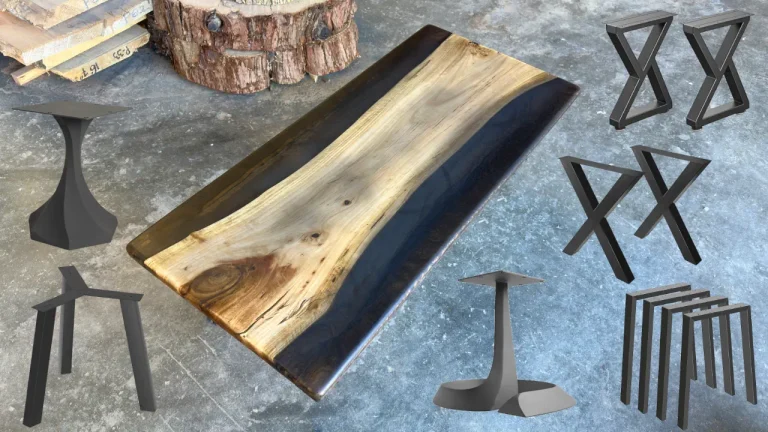


ADA Compliant, Stylish, and Practical. Here are some table base styles that would meet ADA requirements while still allowing for creative design and aesthetic flexibility:
1. Trestle Base
- Description: Features a central beam or support structure with legs at the ends.
- Why ADA-Friendly: The central beam keeps the area under the table clear, providing ample knee and toe clearance on both sides.
- Design Tip: Using locally sourced wood for the beam and legs allows you to customize the design while keeping it functional and accessible.
2. Pedestal Base
- Description: A single central support that holds up the tabletop, often cylindrical or square in shape.
- Why ADA-Friendly: No legs obstructing access, and the pedestal offers plenty of space for wheelchairs to roll under.
- Design Tip: A wood pedestal base can be sculpted in a variety of shapes while ensuring it remains stable and provides the required clearances.
3. Cantilever Base
- Description: One side of the table is mounted to a wall or another fixed surface, with legs or a support on the opposite side.
- Why ADA-Friendly: Offers unobstructed knee and toe clearance on one side, perfect for smaller spaces or desks.
- Design Tip: Use strong, sustainably harvested timber for the support side, keeping the overall design lightweight but robust.
4. C-Leg Base
- Description: A leg that curves inward (forming a “C” shape) and is often used in desks and tables.
- Why ADA-Friendly: This design minimizes the footprint of the legs, providing maximum clearance under the table.
- Design Tip: The C-leg can be crafted from custom wood and finished with your signature wood treatments, giving the table a modern yet warm feel.
5. Open Frame Base
- Description: A minimalist frame with four legs, but designed to be recessed to allow ample room for wheelchair access.
- Why ADA-Friendly: The open design ensures that the legs are positioned far enough apart to avoid obstruction while maintaining stability.
- Design Tip: Use thicker, strong wood for the legs, and consider adding cross-braces low to the ground to enhance stability without affecting toe clearance.
6. Adjustable Height Bases
- Description: Bases with adjustable heights, often controlled by a mechanical or electronic system.
- Why ADA-Friendly: Users can modify the table height to suit their specific needs, making it adaptable for multiple users.
- Design Tip: These bases can be built into solid wood table designs, where the electronics are hidden or integrated into the woodwork for a seamless look.